All Blog Tags
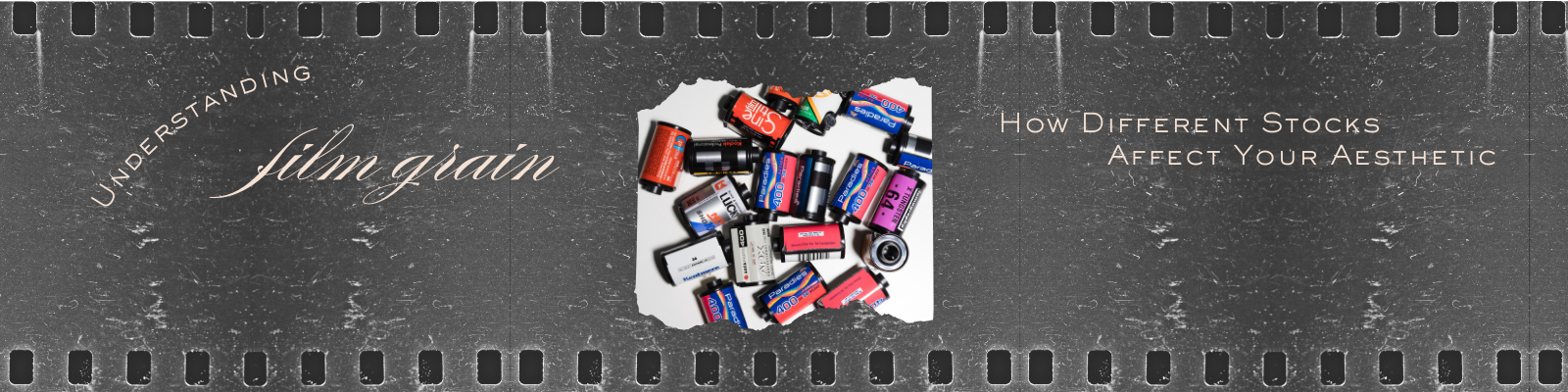
How Film Stock Selection Shapes Texture, Mood, and Visual Character
Film grain is often described as “texture,” “character,” or even imperfection,” but those labels don’t really explain what’s happening or why it matters. If you’re shooting film, or trying to recreate a film look digitally, grain isn’t just a stylistic filter. It’s the visible result of physical materials reacting to light, shaped by the choices you make before, during, and after exposure.
When you understand where grain comes from and how different film stocks handle it, you stop treating it as an accident and start using it as a creative tool. The look of your images becomes intentional rather than incidental.
The Science Behind Film Grain
Film grain originates in the silver halide crystals suspended in a film’s emulsion. These crystals vary in size, shape, and distribution depending on how the film is designed. When light hits the emulsion, it alters the structure of the exposed crystals, creating a latent image that’s invisible until development. During chemical processing, those altered crystals are reduced to metallic silver, forming the visible image – and the grain itself.
Larger crystals tend to clump together in a way that makes grain more obvious, giving images a rougher, more textured look. Smaller crystals are packed more tightly and evenly, producing smoother transitions and finer grain. Manufacturers carefully engineer this balance, which is why two films with the same ISO can still look very different.
Another important factor is the randomness of grain distribution. Grain doesn’t follow a grid or pattern, which is why it feels organic. That subtle variation from frame to frame is a big reason film images feel alive and tactile in a way that’s hard to replicate digitally.
Film Grain vs. Digital Noise
Although they can look similar at a glance, film grain and digital noise behave very differently.
Digital noise is a byproduct of electronic amplification in a camera sensor, especially when shooting in low light or at high ISO settings. It often shows up as uniform speckles or colour shifts, particularly in shadows, and it tends to feel detached from the image itself.
Film grain, by contrast, is part of the image’s physical structure. It’s literally embedded in the emulsion layer. It’s tied to how light interacts with the emulsion; it usually follows the tonal range of the scene more naturally. Grain often appears softer in highlights and more pronounced in shadows, which can add depth rather than distraction. This is why many people describe film grain as “pleasant” or “forgiving,” while digital noise is often something to be corrected or removed.
The Role of Development
Exposure is only half the story. Development has a huge influence on how grain ultimately looks. Push processing, where film is intentionally underexposed and then overdeveloped to compensate, increases contrast and makes grain more pronounced. Shadows become denser, highlights punchier, and the image takes on a more aggressive, high-energy feel.
Pull processing does the opposite, reducing contrast and keeping grain more subdued. Even standard development choices – like developer type, dilution, and agitation – can subtly change grain structure and edge sharpness. This means grain isn’t just baked in at the moment you press the shutter. It’s something you actively shape in the darkroom or lab, whether you realize it or not.
Film Stock Variations and Grain Characteristics
Every film stock has its own grain signature, influenced by format, speed, and emulsion technology. Larger formats like medium and large format spread the image over more surface area, which naturally reduces the appearance of grain and increases perceived detail. With 35mm, grain becomes more visible, especially in prints or scans, and often becomes part of the image’s personality.
Film speed plays a major role as well. Lower ISO films use smaller crystals, resulting in fine grain and high resolution. They’re ideal for controlled lighting situations and scenes where subtle tonal shifts matter. Medium-speed films offer a balance between flexibility and texture, making them reliable all-around choices. High-speed films rely on larger crystals to maintain light sensitivity, which leads to more obvious grain and a rougher overall look.
Specific Stock Examples:
- Kodak Tri-X 400: Known for bold, punchy grain and strong contrast. Often used in street photography and documentary work where texture adds emotional weight.
- Kodak Portra 160: Fine-grained and neutral, with smooth skin tones — popular for portraits and weddings.
- Kodak Ektar 100: Extremely fine grain and high saturation, well-suited for landscapes and travel photography.
- Kodak T-MAX 100/400: Uses tabular grain technology, producing sharper images with finer grain compared to traditional cubic-grain stocks.
How Grain Shapes Aesthetic and Mood
Grain has a psychological effect on how an image is read. Coarse grain often feels raw, immediate, and unpolished, which can heighten tension or realism. It can make images feel closer to documentary or reportage, as if you’re seeing a moment as it happened rather than a
carefully constructed scene.
Fine grain, on the other hand, tends to feel calm, refined, and timeless. It keeps attention on composition, light, and subject rather than texture. Grain can also act as a bridge to nostalgia, especially when paired with classic lighting or muted colour palettes. It subtly referencing earlier eras of photography and cinema.
Because of this, grain often aligns naturally with certain genres. Portraits benefit from smoother grain that preserves skin tones. Street photography and documentary work often lean into heavier grain to emphasize motion, chaos, and authenticity. In editorial work, grain can help strip away some of the clinical precision of digital imagery and replace it with something more human.
Practical Considerations When Choosing a Film Stock
Understanding grain becomes most useful when you apply it to real shooting conditions. Low-light situations naturally make grain more visible, especially when using faster films or pushing development. Instead of fighting it, many photographers plan for this and let grain become part of the visual language of the image.
Push processing is a great example of grain as a creative choice. A pushed roll of Tri-X or T-MAX can deliver dramatic contrast and bold texture that works perfectly for concerts, night scenes, or high-energy environments. On the flip side, if you’re shooting product work,
architecture, or formal portraits, excessive grain can distract from detail and accuracy.
The key question to ask is whether grain supports what you’re trying to say. Think of it as another compositional element, like depth of field or colour temperature. If it adds emotion, atmosphere, or context, it’s doing its job. If it pulls attention away from the subject, it may be worth choosing a slower film or more controlled development.
Choosing Your Grain Story
Film grain is the visible outcome of countless interconnected decisions, from emulsion chemistry to exposure, development, and stock selection. When you understand how those pieces fit together, grain stops being a mystery and becomes a powerful part of your creative toolkit.
Instead of asking whether grain is good or bad, it’s more useful to ask what it contributes to the image. When chosen with intention, grain adds mood, authenticity, and a sense of craft that can’t be separated from the story the image is telling.
Share
Most Recent Posts